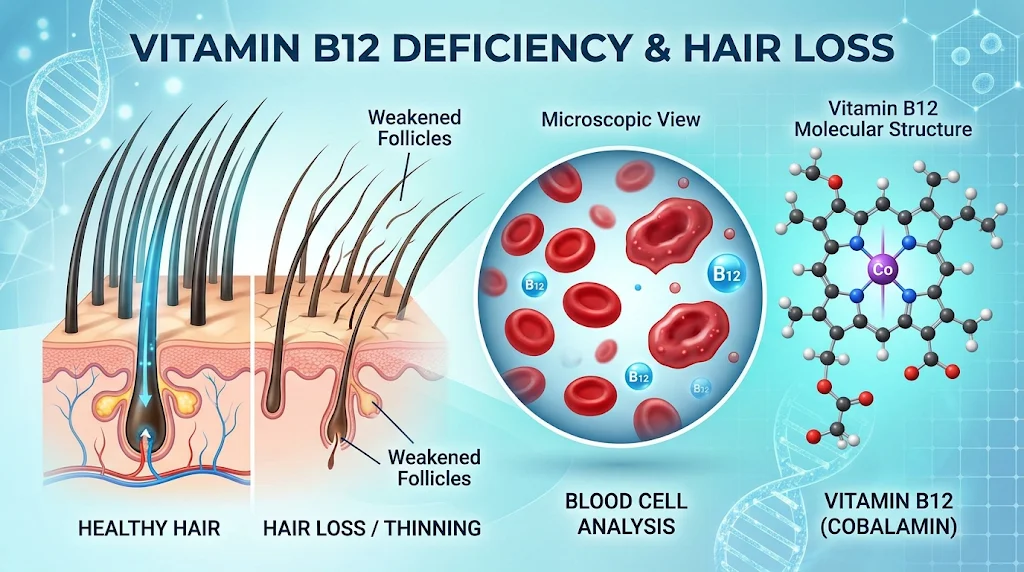
Hair loss can be concerning, particularly when you do not know what is causing it. You might notice extra strands in your shower, hair collecting on your pillow, or gradual thinning around your hairline. While genetics and hormonal changes are common explanations, nutritional deficiencies linked to Vitamin B12 Deficiency and Hair Loss and certain medical conditions can also affect overall hair health.
Table of Contents
One nutrient that often attracts attention is vitamin B12. This essential vitamin supports red blood cell production, DNA synthesis, and healthy nerve function. When your body does not receive or absorb enough of it, a deficiency can develop and lead to several health problems.
But is there a real connection between vitamin B12 deficiency and hair loss?
The answer requires some clarification. Vitamin B12 is essential for overall health, but current scientific evidence has not established low B12 levels as a direct cause of hair loss. A deficiency may occur alongside other nutritional or medical problems that affect general health, so identifying the underlying cause is important.
In this guide, you will learn about possible symptoms, common causes, diagnostic tests, treatment options, food sources, and practical ways to support healthier hair.
What Is Vitamin B12 and Why Is It Important?
Vitamin B12, also called cobalamin, is a water-soluble vitamin that your body needs for several essential processes.
It helps your body:
- Produce healthy red blood cells.
- Maintain normal nerve function.
- Support DNA production.
- Convert nutrients into usable energy.
- Maintain normal cellular metabolism.
Your body cannot manufacture vitamin B12 on its own. You must obtain it through food, fortified products, or dietary supplements.
According to the National Institutes of Health (NIH), the recommended daily intake for most adults is 2.4 micrograms. Pregnant and breastfeeding women have slightly different requirements.
Vitamin B12 is not a proven hair growth supplement. However, maintaining adequate nutritional levels is an important part of supporting your overall health.
Can Vitamin B12 Deficiency Cause Hair Loss?
This is the central question behind vitamin B12 deficiency and hair loss.
At present, there is insufficient high-quality scientific evidence to confirm that vitamin B12 deficiency directly causes hair loss in otherwise healthy individuals.
Vitamin B12 contributes to red blood cell formation and normal cell function. When levels become too low, the deficiency can lead to megaloblastic anemia and neurological complications.
Hair growth, however, is influenced by several different factors, including:
- Genetic background.
- Hormonal activity.
- Thyroid function.
- Protein and iron intake.
- Scalp health.
- Certain medications.
- Physical illness and stress.
Some people experiencing hair thinning may also have low vitamin B12 levels. However, finding a deficiency does not automatically establish it as the reason their hair is falling out.
The relationship between vitamin B12 deficiency and hair loss should therefore be approached carefully. Testing can help identify a deficiency, while a dermatologist can investigate other possible explanations for hair shedding.
Symptoms of Vitamin B12 Deficiency You Should Recognize
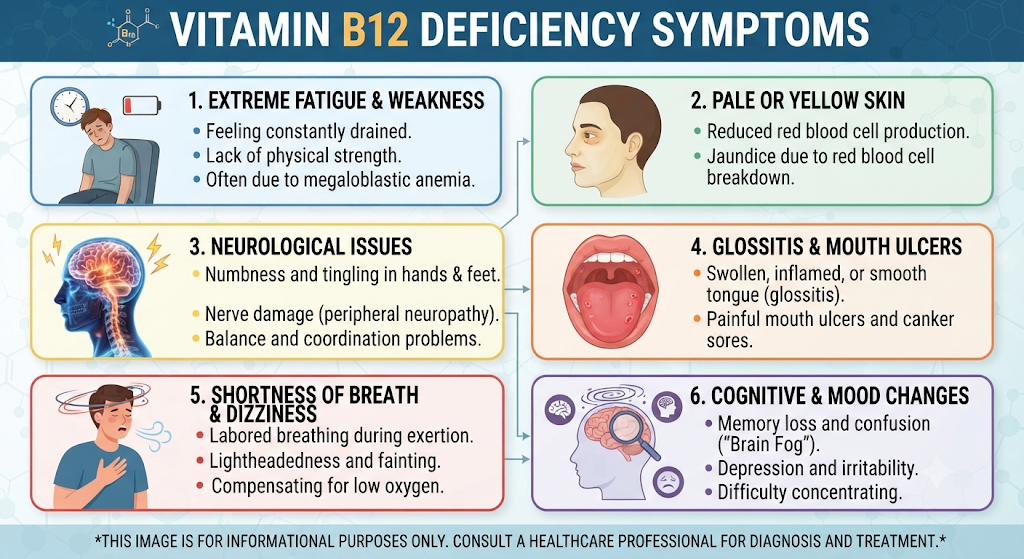
Vitamin B12 deficiency can develop slowly. Some individuals experience symptoms over several months, while others may not notice obvious changes initially.
The following signs are worth discussing with a healthcare professional.
1. Persistent Fatigue and Weakness
Unusual tiredness is one of the common symptoms associated with vitamin B12 deficiency.
When low B12 levels cause anemia, your red blood cells may not deliver oxygen efficiently throughout your body. This can leave you feeling exhausted even after getting enough sleep.
You may also experience reduced stamina, muscle weakness, or difficulty completing everyday activities.
2. Pale or Yellowish Skin
Some people with vitamin B12 deficiency develop unusually pale or slightly yellowish skin.
This may occur because abnormal red blood cell production and breakdown affect the appearance of the skin.
However, changes in skin color can have several causes and cannot confirm a nutritional deficiency by themselves.
3. Numbness and Tingling
Vitamin B12 supports the normal functioning of your nervous system.
When deficiency affects the nerves, you may experience:
- Tingling in your hands and feet.
- Numbness or burning sensations.
- Difficulty maintaining balance.
- Changes in sensation.
- Unusual weakness.
Do not ignore persistent neurological symptoms. Delayed treatment can sometimes result in lasting nerve damage.
4. Memory and Concentration Difficulties
Some people with low B12 levels experience memory problems, difficulty concentrating, or mood changes.
These symptoms are not specific to vitamin B12 deficiency. Sleep disorders, stress, depression, and other health conditions can produce similar problems.
5. Sore or Inflamed Tongue
A condition called glossitis can cause the tongue to become red, smooth, swollen, or painful.
Some individuals also experience mouth discomfort, reduced appetite, or changes in taste.
6. Dizziness and Shortness of Breath
When vitamin B12 deficiency leads to anemia, the reduced oxygen-carrying capacity of your blood may cause dizziness, headaches, and breathlessness.
Severe shortness of breath, chest pain, or fainting requires urgent medical evaluation.
Important: Hair loss alone is not a reliable indicator of vitamin B12 deficiency. A proper medical assessment is necessary to identify the cause.
How Low Vitamin B12 Levels May Relate to Hair Health
Hair follicles are small but active structures that depend on normal cellular activity and an adequate supply of nutrients.
Each strand moves through three main stages:
- Anagen: The active growth stage.
- Catagen: The short transition stage.
- Telogen: The resting stage, after which the hair eventually sheds.
Nutritional problems, hormonal changes, illness, and certain medications can influence the normal hair growth cycle.
Vitamin B12 supports important functions throughout the body, but researchers have not established that a deficiency directly interrupts the hair follicle cycle.
There are several indirect reasons why nutritional health may matter when investigating hair shedding.
Other Nutritional Deficiencies
Hair growth requires adequate protein and several essential nutrients.
Low iron stores, insufficient protein intake, and certain other nutritional deficiencies may contribute to hair problems in some individuals.
A person following a highly restrictive diet may have multiple nutritional deficiencies rather than an isolated vitamin B12 problem.
Anemia and General Health
Severe vitamin B12 deficiency can cause megaloblastic anemia.
Anemia may affect energy levels and overall physical health. People experiencing multiple nutritional deficiencies or significant illness may also develop temporary hair shedding.
However, this does not establish vitamin B12 deficiency as a direct cause of hair loss.
Rapid Weight Loss and Poor Nutrition
Crash diets, severe calorie restriction, and inadequate protein intake can interfere with normal hair growth.
If you have recently lost a significant amount of weight, consider discussing your diet and symptoms with a healthcare professional.
Common Causes of Vitamin B12 Deficiency
A vitamin B12 deficiency does not always mean you are eating poorly. Sometimes, your digestive system cannot absorb enough of the vitamin even when your diet contains adequate amounts.
Understanding the underlying cause helps determine the most appropriate treatment.
1. Vegan and Vegetarian Diets
Natural vitamin B12 is found mainly in animal-based foods.
People following strict vegan diets may have a higher risk of deficiency if they do not regularly consume fortified foods or appropriate supplements.
Vegetarians may also have inadequate intake depending on how much dairy, eggs, and fortified food they consume.
2. Digestive and Absorption Problems
Certain medical conditions can interfere with vitamin B12 absorption.
Examples include:
- Crohn’s disease.
- Celiac disease.
- Autoimmune gastritis.
- Pernicious anemia.
- Conditions affecting the small intestine.
People with these conditions may develop a deficiency even when their dietary intake is sufficient.
3. Certain Prescription Medications
Some medications can affect vitamin B12 absorption, particularly with long-term use.
Two important examples are:
- Metformin: A medication commonly prescribed for type 2 diabetes.
- Proton pump inhibitors (PPIs): Medicines used to reduce stomach acid, including certain treatments for acid reflux.
If you take these medications regularly, ask your healthcare provider whether monitoring your B12 levels is appropriate. Never discontinue prescribed medication without medical advice.
4. Aging
Older adults may have difficulty absorbing vitamin B12 from food because of changes in stomach acid production and digestive function.
This can increase the risk of deficiency, making appropriate nutritional assessment important.
5. Stomach or Intestinal Surgery
Certain gastrointestinal procedures can reduce the body’s ability to absorb vitamin B12.
People who have undergone gastric bypass, stomach surgery, or procedures involving the small intestine may need ongoing monitoring.
Best Foods That Provide Vitamin B12
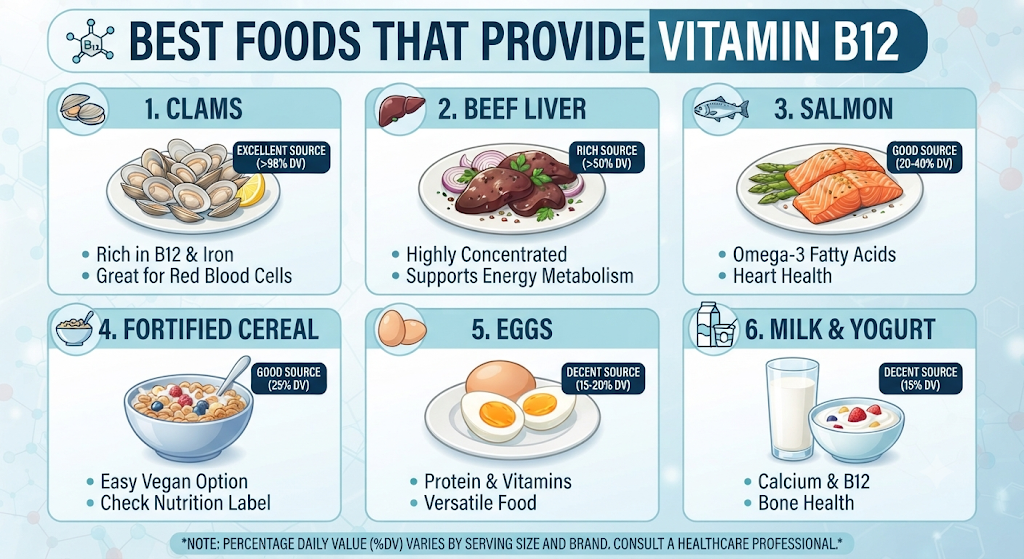
Food is an important source of vitamin B12 for people who can absorb it properly.
Including a variety of nutrient-rich foods in your diet can help maintain adequate vitamin intake.
1. Clams
Clams are among the richest natural sources of vitamin B12. They also provide protein, iron, and other essential nutrients.
2. Salmon
Salmon contains vitamin B12, high-quality protein, and omega-3 fatty acids.
It is a nutritious seafood option that can fit into a balanced eating pattern.
3. Beef
Beef provides vitamin B12, protein, iron, and zinc. Reasonable portions can contribute to your daily nutrient requirements.
4. Eggs
Eggs contain vitamin B12 and high-quality protein. They are also convenient and easy to include in breakfast or lunch.
5. Milk and Yogurt
Dairy products provide vitamin B12 along with protein and calcium.
Milk, plain yogurt, and other dairy foods can contribute to your daily intake.
6. Fortified Breakfast Cereals
Some breakfast cereals contain added vitamin B12.
These products can be useful for people who follow vegetarian or vegan diets. Check the Nutrition Facts label to determine the amount provided per serving.
7. Fortified Plant-Based Milk
Certain soy, almond, and other plant-based milk products contain added vitamin B12.
However, not every product is fortified, so always read the ingredient and nutrition labels.
8. Fortified Nutritional Yeast
Some nutritional yeast products contain added vitamin B12 and can be sprinkled over pasta, vegetables, salads, and other meals.
Regular nutritional yeast is not automatically a reliable source unless the product is fortified.
Remember: Unfortified plant foods do not naturally provide reliable amounts of vitamin B12.
How Is Vitamin B12 Deficiency Diagnosed?
If you have persistent fatigue, numbness, tingling, or other possible symptoms, a healthcare professional may recommend blood tests.
Diagnosis generally involves reviewing your symptoms, medical history, dietary habits, medications, and laboratory results.
Serum Vitamin B12 Test
This blood test measures the amount of vitamin B12 circulating in your bloodstream.
Many laboratories consider levels below approximately 200–250 pg/mL to be low, although reference ranges and diagnostic thresholds vary.
A borderline result may require additional testing.
Complete Blood Count (CBC)
A CBC measures red blood cells, hemoglobin, and other blood components.
Vitamin B12 deficiency can cause megaloblastic anemia, which is associated with unusually large red blood cells.
However, normal blood counts do not always rule out vitamin B12 deficiency.
Methylmalonic Acid (MMA) Test
An MMA test may help clarify uncertain vitamin B12 results.
Elevated MMA levels can support a diagnosis of deficiency, although kidney function and other factors can influence the results.
Homocysteine Test
Homocysteine levels may increase when vitamin B12 or folate levels are inadequate.
However, this test is less specific because other health conditions can also affect the result.
Depending on your symptoms, a healthcare professional may also recommend iron studies, thyroid testing, or additional investigations.
Treatment Options for Vitamin B12 Deficiency
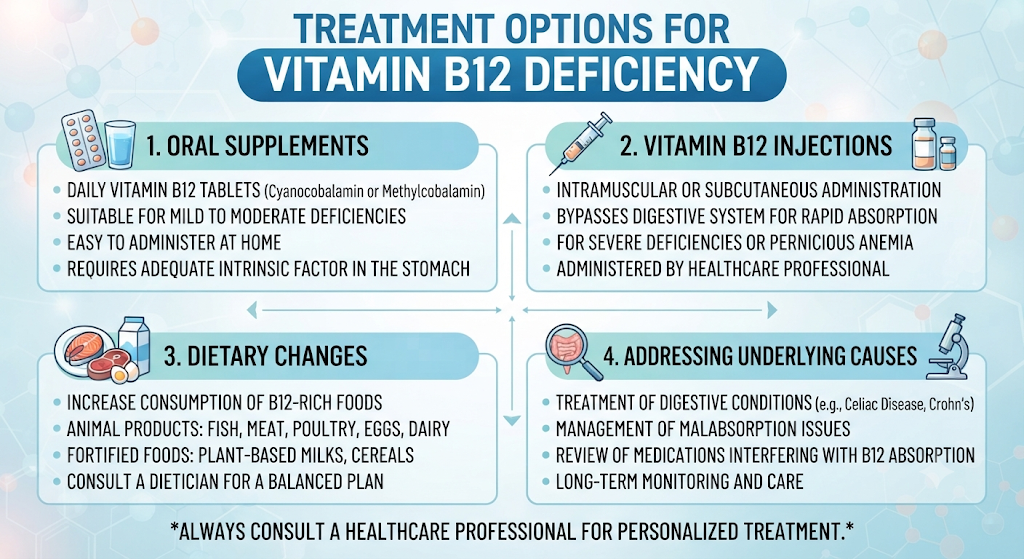
The right treatment depends on how severe the deficiency is and why it developed.
There is no single treatment plan suitable for everyone.
1. Oral Vitamin B12 Supplements
Oral supplements may be appropriate when a deficiency is related to inadequate dietary intake or certain other causes.
Common forms include cyanocobalamin and methylcobalamin.
The appropriate dosage depends on your medical circumstances. A healthcare professional can recommend a suitable product and treatment schedule.
2. Vitamin B12 Injections
Some people require vitamin B12 injections, particularly when they have significant absorption problems or certain medical conditions.
Injections deliver the vitamin directly into the body and can bypass digestive absorption difficulties.
The frequency and duration of injections depend on the underlying cause and severity of the deficiency.
3. Treating the Underlying Cause
Correcting low vitamin B12 levels is only one part of treatment.
For example, people with autoimmune gastritis or certain digestive conditions may need long-term replacement therapy.
If medication contributes to the problem, your healthcare provider can review your treatment and determine whether monitoring or adjustments are appropriate.
Do not start high-dose supplements or injections solely to improve hair growth without first establishing whether you have a deficiency.
Can Hair Grow Back After Correcting Vitamin B12 Deficiency?
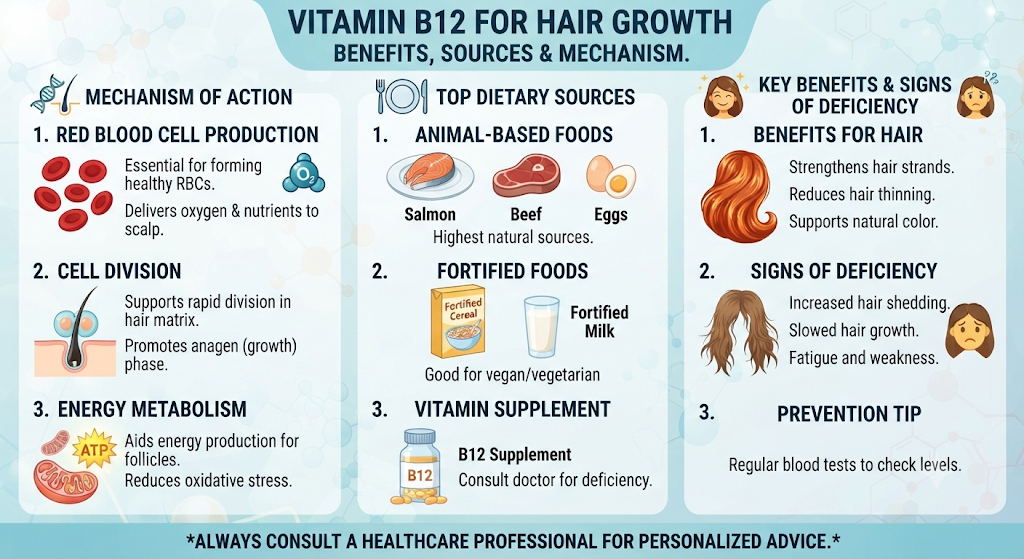
People researching vitamin B12 deficiency and hair loss often want to know whether their hair will return to its previous thickness.
The answer depends on what caused the shedding.
If someone has a confirmed nutritional deficiency, correcting it can improve their overall nutritional health. However, there is insufficient evidence to promise that vitamin B12 treatment will reverse hair loss.
Hair regrowth may be possible when the underlying cause is temporary and successfully treated. However, genetic hair loss, hormonal conditions, autoimmune disorders, and certain scalp diseases require different approaches.
Hair also grows gradually. Even when the original trigger is addressed, visible changes may take several months.
If shedding continues despite correcting a documented deficiency, a dermatologist can investigate other causes and discuss appropriate treatment options.
Other Common Causes of Hair Loss
Not every case of thinning is connected to nutritional deficiencies.
Some common explanations include:
Androgenetic alopecia: Also known as pattern hair loss, this inherited condition affects both men and women.
Telogen effluvium: A temporary increase in shedding that may follow physical stress, surgery, childbirth, high fever, or serious illness.
Thyroid disorders: An overactive or underactive thyroid can affect normal hair growth.
Iron deficiency: Low iron stores may contribute to increased shedding in some individuals.
Hormonal changes: Pregnancy, childbirth, menopause, and certain hormonal conditions may influence hair density.
Alopecia areata: An autoimmune condition that can cause sudden, patchy hair loss.
Identifying the correct condition is essential because treatments differ considerably.
Practical Ways to Support Healthy Hair Growth
Although no food or supplement guarantees thicker hair, healthy habits can support overall hair and scalp health.
Consider these practical steps:
- Eat a balanced diet: Include vegetables, fruits, whole grains, protein, and nutrient-rich foods.
- Get enough protein: Hair contains keratin, a structural protein, so adequate protein intake matters.
- Avoid extreme dieting: Severe calorie restriction can contribute to excessive shedding.
- Manage everyday stress: Regular exercise, relaxation, and adequate sleep support general well-being.
- Use gentle hair care: Limit excessive heat styling, tight hairstyles, and aggressive brushing.
- Address confirmed deficiencies: Follow your healthcare provider’s recommendations for nutritional treatment.
- Avoid unnecessary supplements: Excessive amounts of certain nutrients, including vitamin A and selenium, can contribute to hair loss.
The American Academy of Dermatology recommends identifying nutritional deficiencies before relying on supplements marketed for hair growth.
When Should You See a Doctor?
Some daily hair shedding is normal. However, noticeable or persistent changes deserve attention.
Consider scheduling an appointment with a healthcare professional if you experience:
- Sudden or excessive hair shedding.
- Noticeable thinning over a short period.
- Bald patches on your scalp.
- Persistent fatigue or unexplained weakness.
- Numbness or tingling in your hands or feet.
- A sore or unusually smooth tongue.
- Hair loss accompanied by other unexplained symptoms.
A dermatologist can examine your scalp, evaluate your hair loss pattern, and recommend appropriate testing.
Seek prompt medical attention for new or worsening neurological symptoms, significant balance difficulties, or severe weakness.
Frequently Asked Questions
1. Can vitamin B12 deficiency cause hair loss?
There is not enough strong scientific evidence to establish vitamin B12 deficiency as a direct cause of hair loss. However, nutritional deficiencies and other health problems may occur together and deserve proper evaluation.
2. Does low vitamin B12 cause hair thinning?
Low B12 levels are not a proven direct explanation for hair thinning. Genetics, hormonal changes, thyroid disorders, iron deficiency, and other factors are also important possibilities.
3. Can vitamin B12 supplements help hair grow?
Supplements can correct a confirmed deficiency when used appropriately. However, there is insufficient evidence that extra vitamin B12 improves hair growth in people who already have adequate levels.
4. Which foods contain the most vitamin B12?
Clams, beef liver, fish, meat, eggs, and dairy products are natural sources. Fortified cereals and fortified nutritional yeast are additional options.
5. What are the first signs of vitamin B12 deficiency?
Possible early symptoms include fatigue, weakness, tingling, numbness, and changes in concentration. Symptoms vary, and some people may not experience obvious warning signs.
6. How long does it take to treat vitamin B12 deficiency?
The recovery period depends on the severity, underlying cause, and treatment. Some symptoms improve within weeks, while neurological problems may take longer and can sometimes be permanent.
7. Is vitamin B12 good for hair growth?
Vitamin B12 is essential for normal body function, but it is not an established hair growth treatment. Supplementation is most useful when a deficiency has been identified.
8. Can vitamin B12 deficiency cause hair loss in women?
Women can develop vitamin B12 deficiency, but hair loss in women has many possible causes, including female pattern hair loss, hormonal changes, iron deficiency, and thyroid conditions.
9. Should I take vitamin B12 if my hair is falling out?
Not necessarily. Hair loss alone does not establish a B12 deficiency. Discuss your symptoms and risk factors with a healthcare professional before starting supplementation.
10. Can a blood test identify the cause of hair loss?
Blood tests can identify certain nutritional or medical problems, but they cannot diagnose every type of hair loss. A dermatologist may need to examine your scalp and hair follicles.
Conclusion
Understanding the relationship between vitamin B12 deficiency and hair loss can help you make more informed decisions about your health.
Vitamin B12 plays an important role in red blood cell production, DNA synthesis, and normal nervous system function. However, current research has not established a direct causal relationship between low B12 levels and hair loss.
If you are experiencing excessive shedding, thinning, or other unusual symptoms, avoid assuming that vitamin B12 is the only possible explanation. A healthcare professional can evaluate your symptoms, recommend appropriate blood tests, and identify potential underlying conditions.
Focus on balanced nutrition, evidence-based treatment, and proper medical evaluation rather than relying on supplements that promise instant results.
Healthy hair begins with taking care of your overall health.
Medical Disclaimer:
This article is intended for educational and informational purposes only. It is not a substitute for professional medical advice, diagnosis, or treatment. Always consult a qualified healthcare professional before starting supplements, changing prescribed medications, or treating a suspected nutritional deficiency.